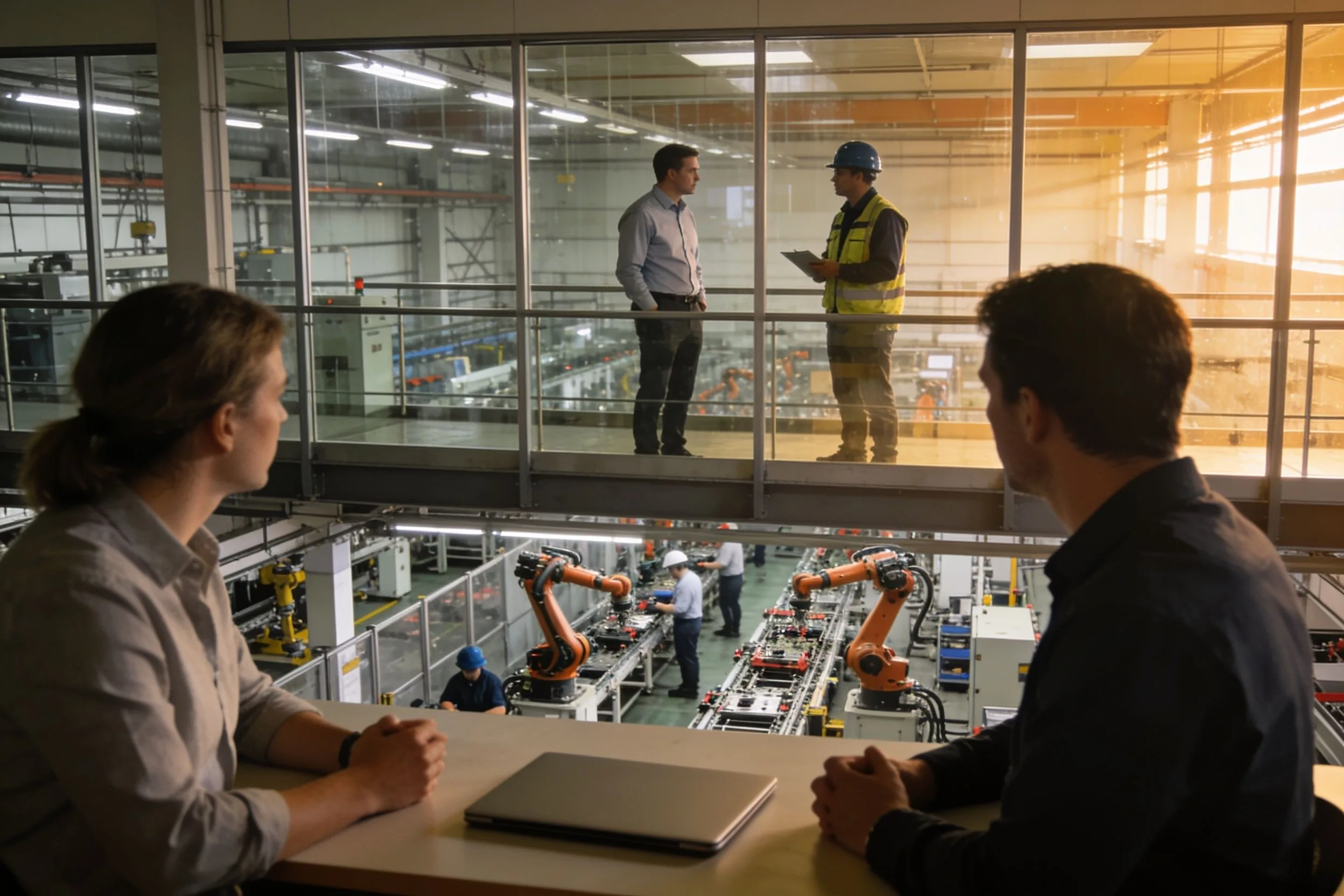
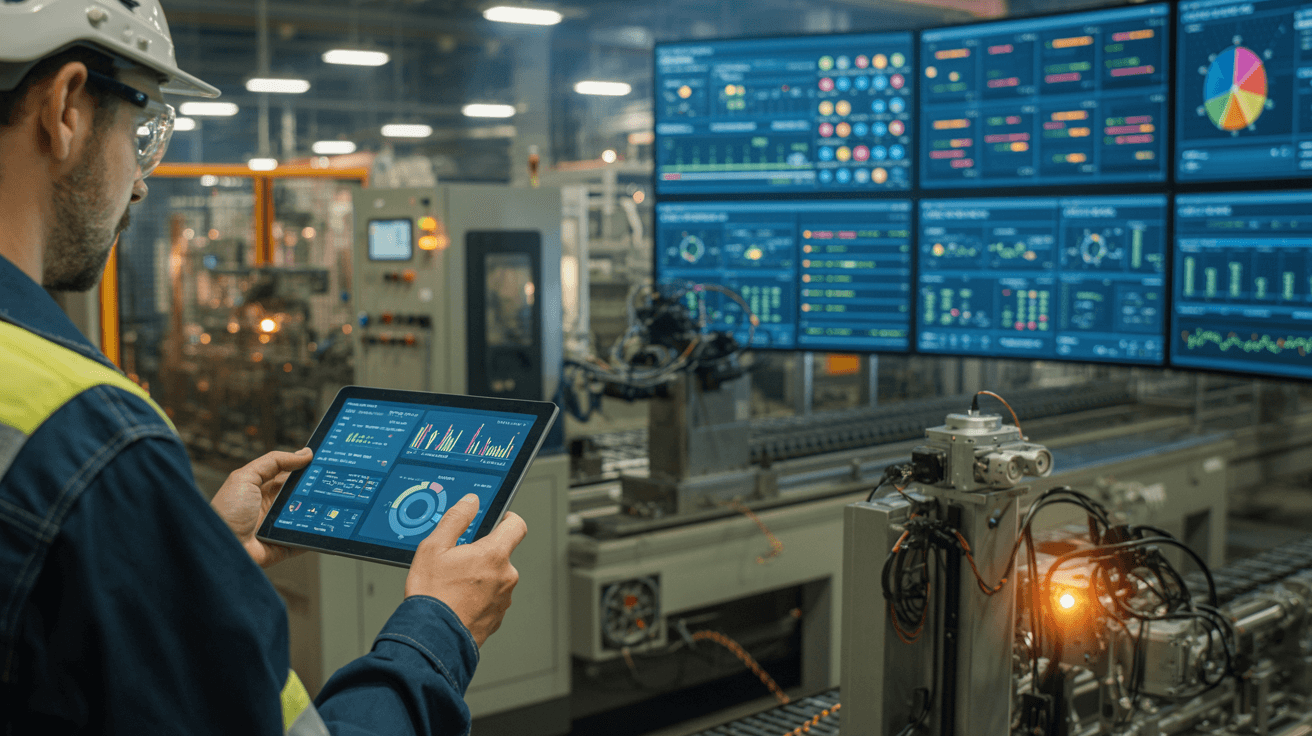
Industrial operators reviewing production information in a control room

Your operation should move fast. Lost details cause rework and delays.

Interzekt helps industrial and manufacturing teams improve the information around the work: quotes, orders, documentation, reporting, maintenance handoffs, and customer or supplier communication.

Operational knowledge is valuable only when it reaches the next person.

The opportunity is usually between systems and teams: the places where someone retypes, translates, checks, chases, or rebuilds information.

01

Quotes and orders lose context between teams.

Customer requirements, revisions, availability, and delivery expectations move from email into several internal systems.
02

Job documentation depends on manual assembly.

People gather notes, photos, forms, specifications, and approvals before the record is useful to operations or a customer.

03

Maintenance information arrives without priority.

Requests, observations, and equipment history live in separate places, making triage and follow-up harder than they should be.

04

Reports explain yesterday after too much work.

Production, quality, delivery, and exception data must be reconciled before a manager can see where attention is needed.

The line runs on information, too.

A specification has to reach production. A completed job needs a usable record. An exception needs an owner and enough context to act.


Quality technician recording an inspection beside a guarded robotic assembly line
Work becomes a record.Inspection notes, photos, and job details stay connected to the right order.
Commercial and production colleagues reviewing a component drawing beside a manufacturing line
A quote reaches the floor intact.Requirements, revisions, and open questions travel with the job.
Operations and maintenance colleagues reviewing a production issue above an active factory floor
An exception finds its owner.The right person gets the status, history, and next decision.

Illustrative scenes, not Interzekt client work. Our focus here is the information around production, not machine control.

What a useful workflow can look like.

Each example starts with a real trigger, names the handoff, and keeps a person in charge of uncertainty.

01

Quote intake with the missing details exposed

Trigger
A request for quote arrives through email, a form, or a sales conversation.
Handoff
Extract the agreed fields, attach source material, and show missing or conflicting requirements.
Human review
A commercial or technical owner validates scope and pricing inputs.
Useful measure
Time to first review, missing fields, and preventable rework.
02

Job records assembled from the work itself

Trigger
A task, inspection, delivery, or production stage is completed.
Handoff
Collect approved notes, files, photos, and system data into the required record.
Human review
A responsible person confirms accuracy before release or customer use.
Useful measure
Documentation time, incomplete records, or follow-up requests.
03

Exception reporting that points to an owner

Trigger
An agreed operating value, deadline, or status moves outside its expected range.
Handoff
Provide the relevant context and route the exception to the accountable team.
Human review
A manager decides the response and closes the loop.
Useful measure
Exception age, response time, and repeated manual checks.

Start with the smallest project worth testing.

Begin with an information handoff beside the physical operation, where failure is recoverable and the current process can be observed safely.

Bring
One quote, order, report, document, or maintenance handoff and representative source material.
Define
Required fields, authoritative systems, approvals, failure modes, and the accountable owner.
Build
A narrow information workflow that preserves source evidence and makes exceptions visible.
Test
Normal cases, missing data, revisions, system downtime, and the manual fallback.

Clear boundaries before a build.

A sound recommendation may be a simpler procedure, an existing integration, or no automation at all.

Alitec planned customer self-service around its insurance expertise.

Interzekt advised Alitec’s team on the information, customer questions, and human handoffs to consider as it planned a fleet-policy application.

This was consulting and guidance, not an Interzekt-built application or a manufacturing-control result.

See the client work

Bring one workflow that keeps getting in the way.

We will examine how it works now, identify the smallest responsible change, and define what a useful result would need to prove.