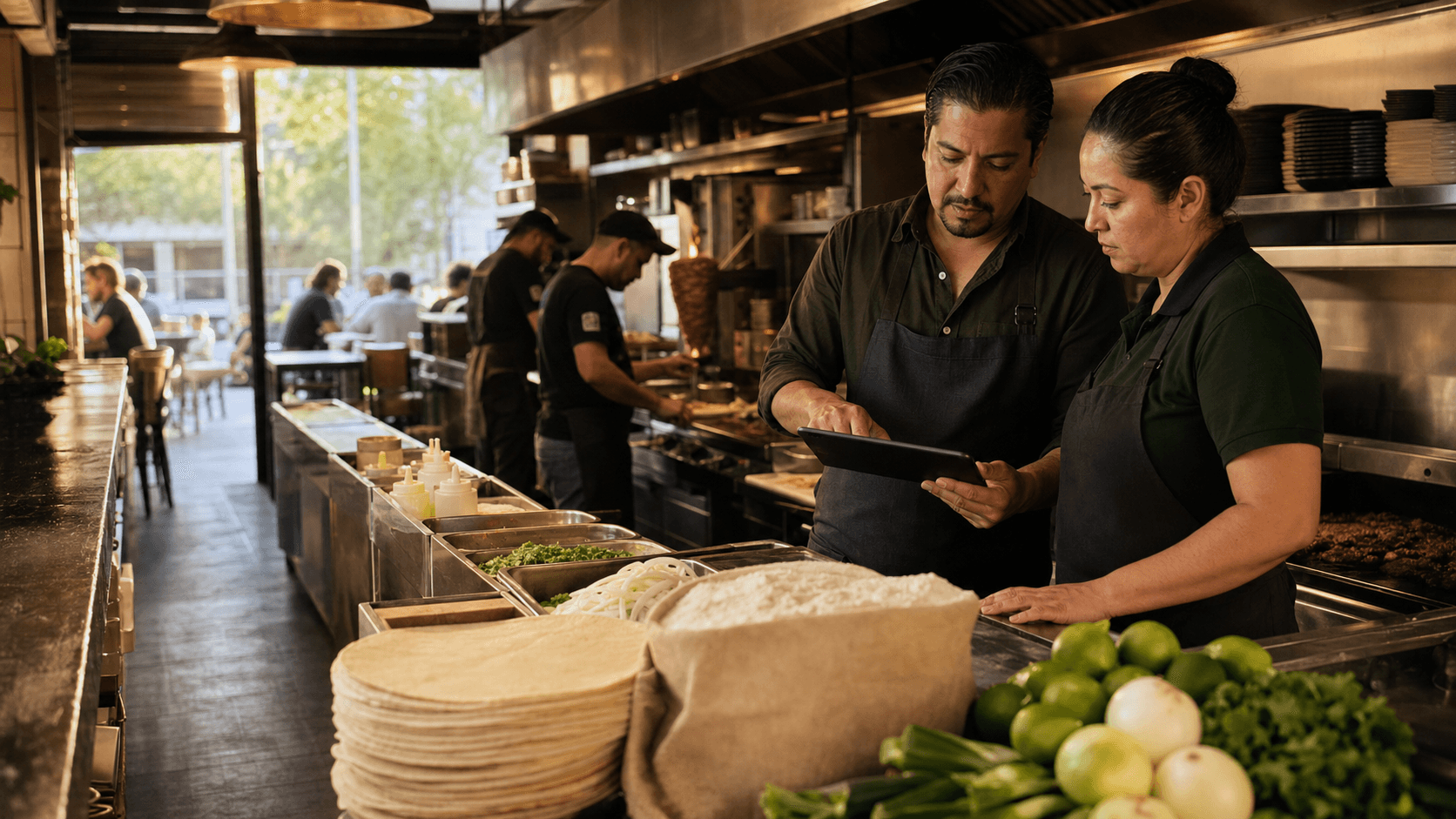
Restaurant operators reviewing information together in a busy kitchen

Run a packed service. Keep guests happy. Know how hard you crushed it. Know why.

Interzekt helps food and beverage operators improve one information workflow at a time, from inventory signals and scheduling changes to supplier, guest, and reporting handoffs.

Small misses become service problems quickly.

The best first projects support the people running service. They do not add another system that demands constant attention.

01

Inventory signals arrive too late.

A missing ingredient, packaging item, or supplier order becomes urgent only when the team is already preparing for service.
02

Schedule changes create repeated coordination.

Availability, substitutions, shift notices, and confirmations move through several messages before the roster is reliable.

03

Guest questions interrupt the same people.

Hours, bookings, menu details, order status, and event questions compete with situations that need a manager.

04

Daily numbers take too long to assemble.

POS, delivery, purchasing, labor, and waste information must be gathered before an operator can see what changed.

What a useful workflow can look like.

Each example starts with a real trigger, names the handoff, and keeps a person in charge of uncertainty.

01

A stock signal that becomes a prepared action

Trigger
A critical item reaches a threshold or recent usage changes materially.
Handoff
Combine the item, current quantity, usage context, and supplier information into an alert or draft order.
Human review
A manager confirms the count and approves any purchase.
Useful measure
Emergency purchases, stock checks, or service interruptions.
02

Schedule changes with a clear owner

Trigger
A person calls out, swaps a shift, or changes availability.
Handoff
Check the agreed rules, identify affected coverage, and prepare notifications.
Human review
A manager approves substitutions and handles exceptions.
Useful measure
Time to fill a shift, coordination messages, or uncovered periods.
03

A daily operating summary built consistently

Trigger
The trading day closes or a scheduled review begins.
Handoff
Collect agreed sales, labor, stock, delivery, or waste inputs into one inspectable summary.
Human review
An operator checks anomalies and decides what needs action.
Useful measure
Report preparation time and unresolved exceptions.

Start with the smallest project worth testing.

Start away from the most fragile moments of service. Prove the workflow on one location, one input, and one accountable owner.

Bring
One repeated back-office problem, the current tools, and examples from a normal week.
Define
The service boundary, approval point, exceptions, and the result an operator would trust.
Build
One focused alert, handoff, report, or assistant using the systems already in place.
Test
Quiet days, rush periods, missing data, staffing changes, and a clear fallback procedure.

Clear boundaries before a build.

A sound recommendation may be a simpler procedure, an existing integration, or no automation at all.

We show the work we have actually done and label the rest clearly.

Our public projects include advice on customer self-service, a marketing operating system, and creative technology. Each shows a different way we work with people who know their field.

We do not claim a restaurant outcome from a project delivered in another field.

See the client work

Bring one workflow that keeps getting in the way.

We will examine how it works now, identify the smallest responsible change, and define what a useful result would need to prove.